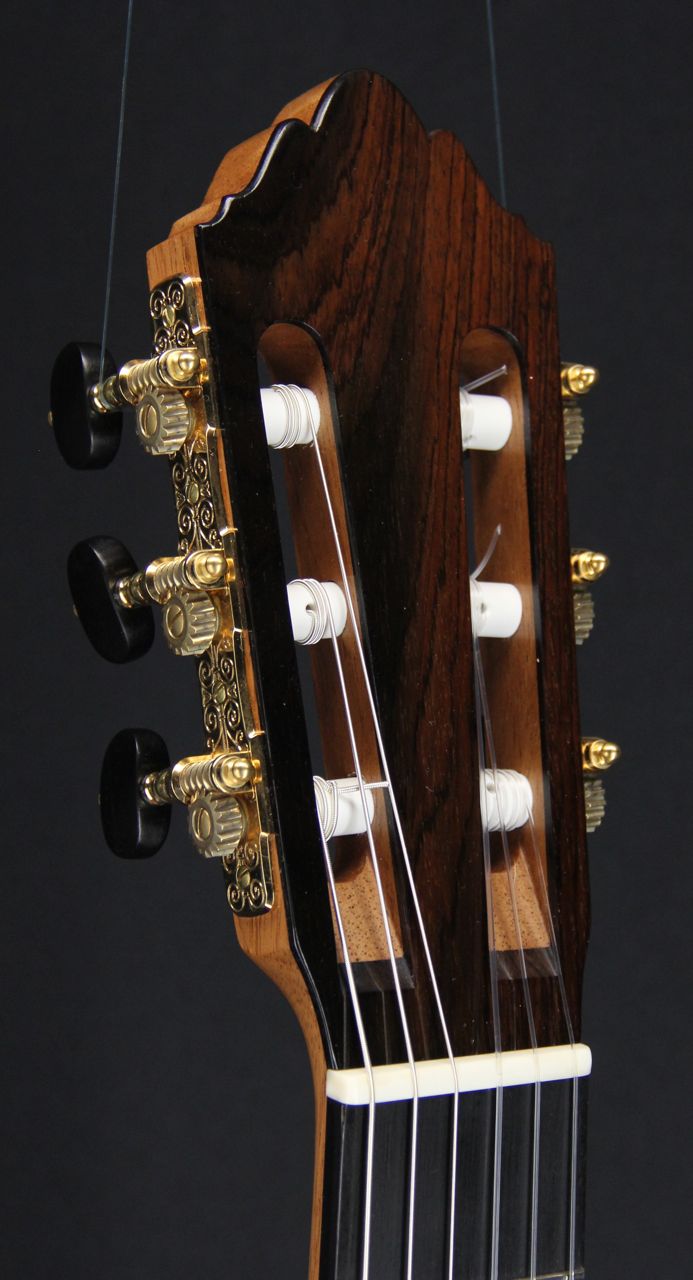
This is my thin-line electro-acoustic nylon string guitar. I call this a Stage Model guitar because of these main features:
It has a thin profile that permits is to be used with a strap, in other words, you can play the guitar standing up. It comes with the strap buttons installed.
The lack of a deep body greatly reduces feed-back when using the guitar plugged-in in loud volume situations
The deep cut-away lets you play the higher frets with ease.
Guitar No. 20 is a deluxe model with first grade indian rosewood, mahogany neck, mitered white/black/white purflings, and spalted maple rosette.
The sound is perfect for jazz and bossa-nova, but because you can EQ as you wish, it is very versatile.
The battery is conveniently located for access from the outside, to facilitate changing it.
If you do want to sit in the traditional classical manner, the output jack is located in the correct place to clear your legs.
The simple onboard volume and tone thumb-wheel controls are located in a good location for right or left had operation.
The upper-bout strap button does not interfere with the left hand and gives the guitar great balance.
Fret position markers on the side of the fingerboard are bright white dots and mark the 3rd, 5th, 7th, 9th, 12th, 15th, and 17th fret positions.
A 12-hole tie block gives perfect downward angle.
The guitar has low action. It can be used for flamenco if golpedores are installed.
The pick-up is a Schatten HFN-C with active preamp and volume-tone controls. This pickups sounds much more like a microphone than under-saddle piezo types. It has none of the expected quack associated with piezo pickups.
I do the installation of the pickup and electronics before closing the guitar, to insure everything is very secure.
The preamp output jack is located very securely on its own block. The battery box also has a reinforced mounting block.
All the cables are neatly secured and tucked where they can't rattle.
Classical guitar made with European spruce soundboard, nootka cypress back and sides, Spanish cedar neck, ebony fingerboard, Indian rosewood bindings, wenge bridge, walnut peg-head overlay and Hauser style rosette.
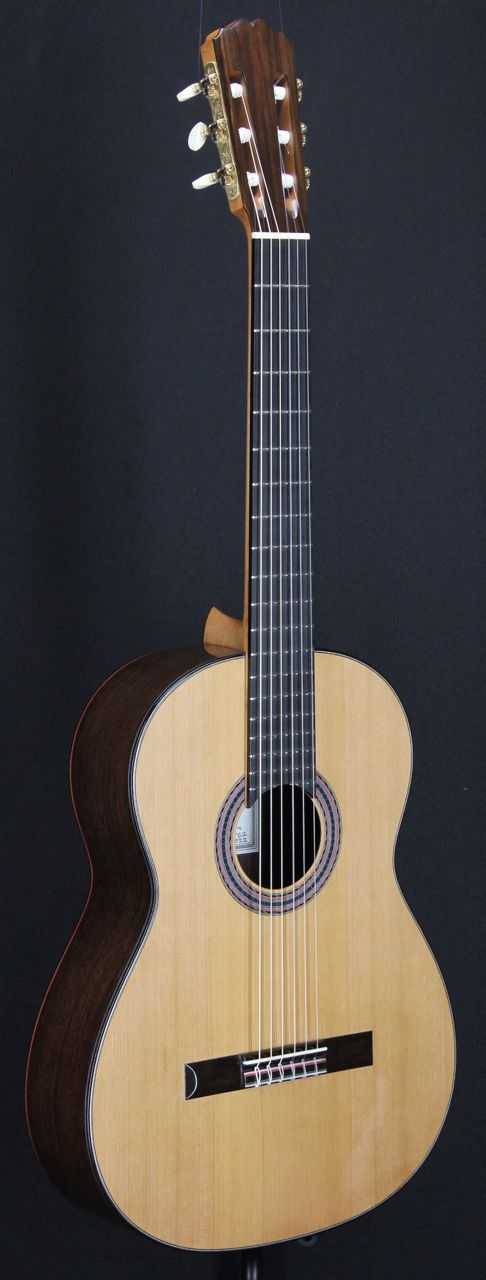
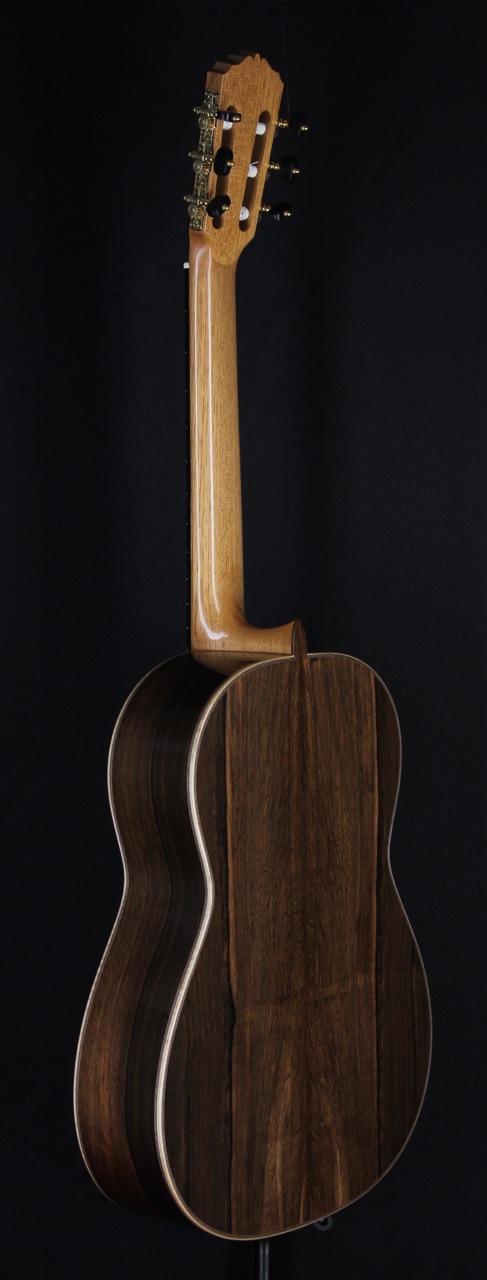
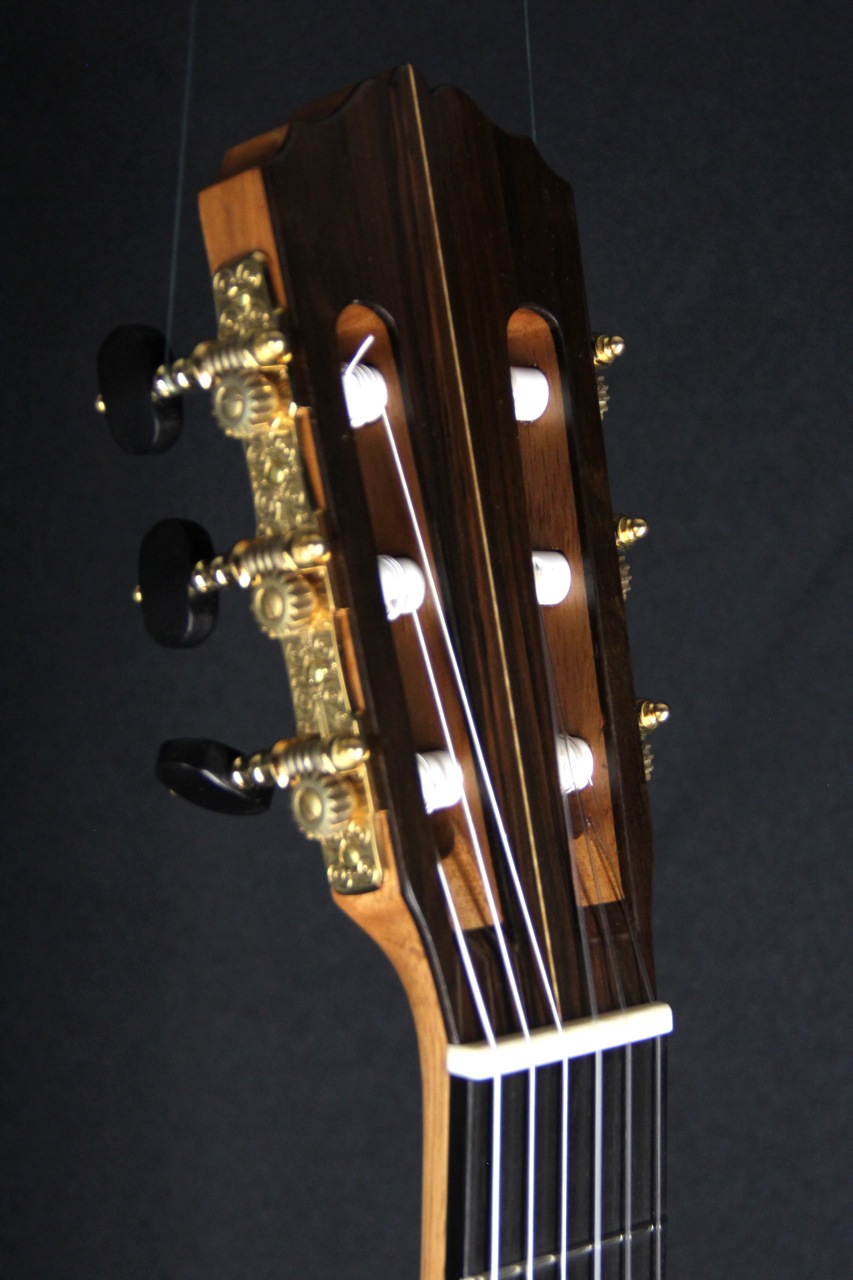
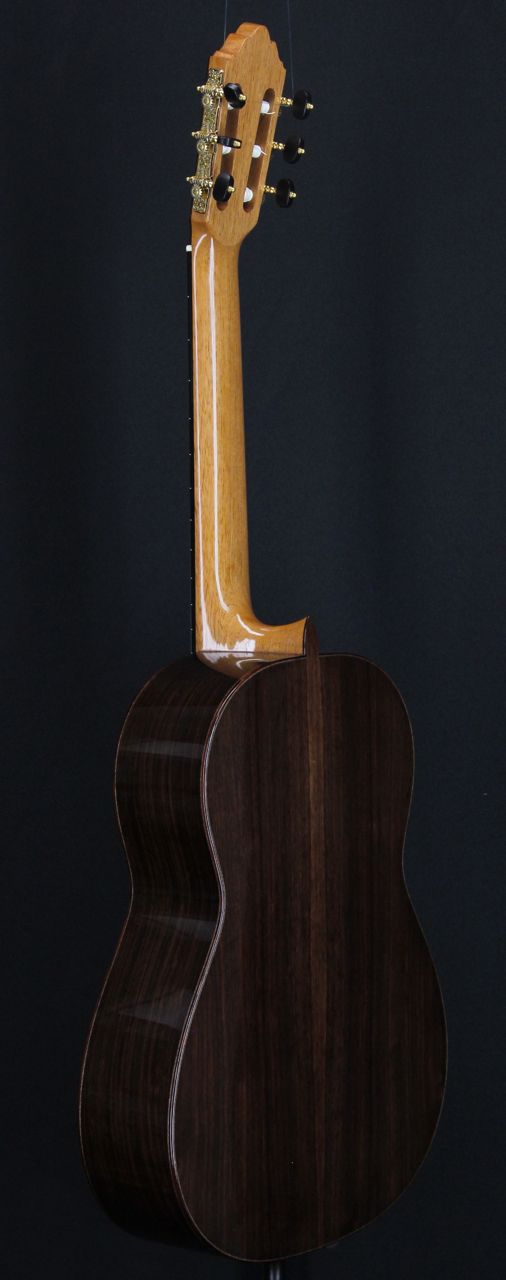
Classical guitar made with western redcedar soundboard, algarrobo (black carob) back and sides, Spanish cedar neck, ebony fingerboard, flame maple bindings, rosewood bridge, walnut peg-head overlay and spalted maple rosette.
This is a special Chilean alerce top and Virginia white oak guitar. I made this for myself, since I had no idea how it would sound, being it the first time I build a guitar with this top wood. The guitar sounds amazing! Harmonics are very active, sound is very sweet, bright and vintage like. Those of you who know wood might observe that the top wood is not even radially cut, it is actually flat-sawn on the perimeter. Alerce or fitzroya cuppresoides has been banned for some time now and it is on the same CITES category as dalberghia nigra. This particular set I got on a trip to Buenos Aires in 2003, and the seller said it was re-sawn from a massive wooden pillar that was salvaged from an old house they demolished on the Chilean coast. They re-sawed it and therefore could not get quarter-sawn sets. This makes the wood decades old, maybe even 100 years old. The back and sides are made from Virginia white oak, a heavy and quite aromatic wood that gives bourbon its unique flavor. It is not used much on guitars, but is quite workable, although not easy to finish if you like that flat look, the pores are deep.


Classical guitar made with European spruce soundboard, guayubira back and sides, Spanish cedar neck, ebony fingerboard, flame maple bindings, rosewood bridge, guaybira and flame maple peg-head overlay and "early Santos" style rosette.
Flamenco guitar made with European spruce soundboard, monterrey cypress back and sides, Spanish cedar neck, ebony fingerboard, Indian rosewood bindings, rosewood bridge, guayubira peg-head overlay and Torres style rosette.